
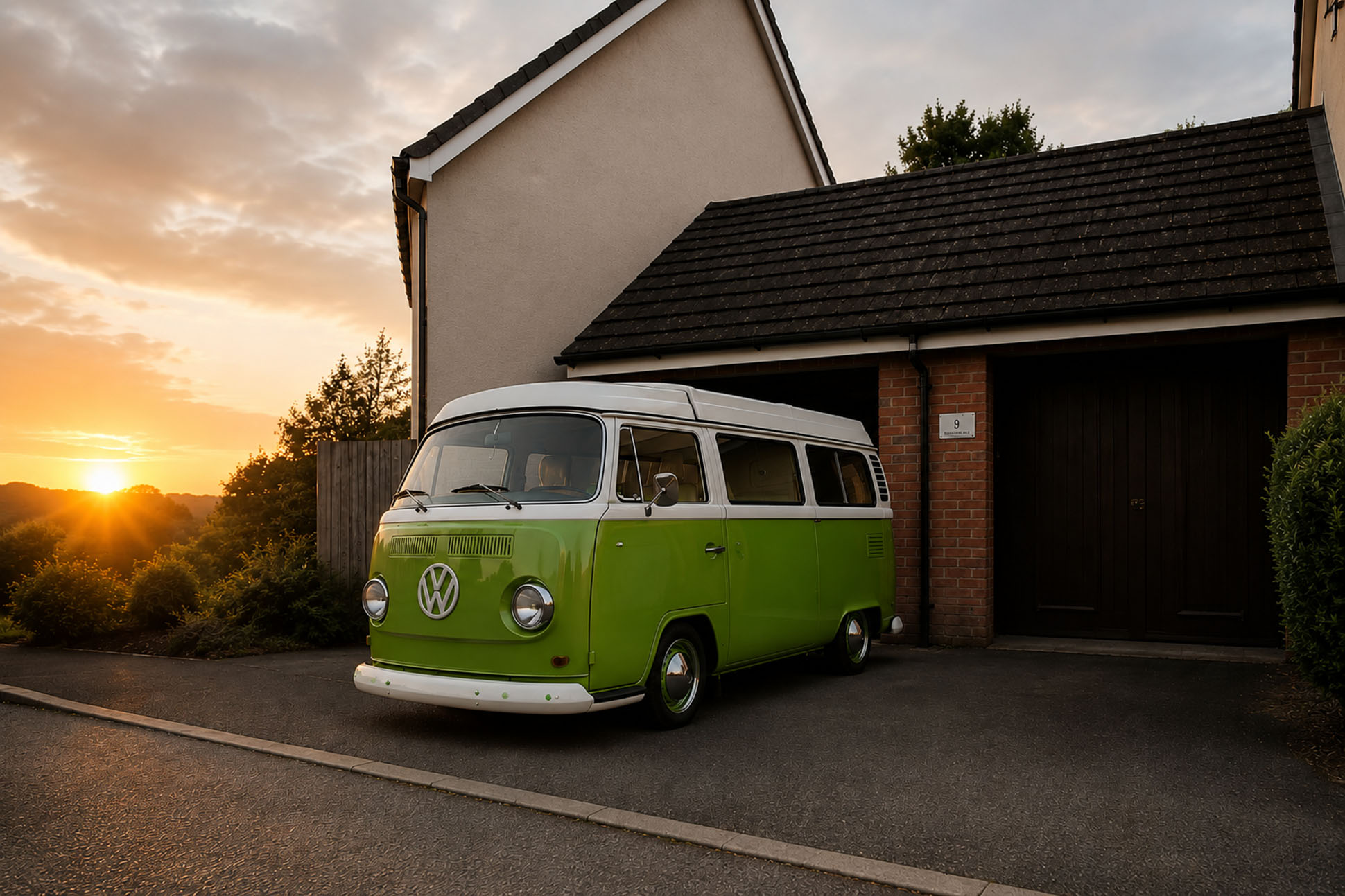
VW garage culture has never been just about fixing vans. It’s about late nights after work with cold tea beside the toolbox, unfinished projects waiting for spare time and the familiar promise of “just one more job” before calling it a night. Across generations of Volkswagen owners, garages have become more than workshops. They’re places where road trips begin, memories are built and project vans slowly become part of everyday life.
Long before social media and polished show builds, people were rebuilding Beetles, Buses and Transporters on driveways, in lockups and under leaking gazebos in the rain. Those moments — the snapped bolts, the parts deliveries, the late-night fixes and the quiet satisfaction of figuring things out yourself — became part of the culture.
Because VW ownership was never really about perfection.
That mindset still defines modern VW culture.
It was always about the people behind the projects.
Most car culture revolves around what’s new.
VW culture tends to revolve around what’s personal.
People keep Transporters for decades. They rebuild vans that financially make no sense. They become emotionally attached to vehicles with rust problems, electrical faults and names like Betty, Doris or Frank.
That attachment is what separates VW ownership from normal car ownership.
A Volkswagen becomes part of everyday life and the wider VW campervan lifestyle.
School runs.
Road trips and van life adventures..
Coffee stops.
Festivals.
Camping weekends.
Breakdowns on the hard shoulder.
Memories that quietly build over years.
That’s why unfinished projects and campervan builds still matter in this scene.
A half-built T4 sitting in the garage isn’t seen as a failure. It’s potential. It’s a story still being written.
And every owner understands that.
The internet usually shows the finished result.
Fresh paint.
Perfect stance.
Spotless interiors.
Golden-hour photos at the beach.
But real VW ownership happens behind closed garage doors.
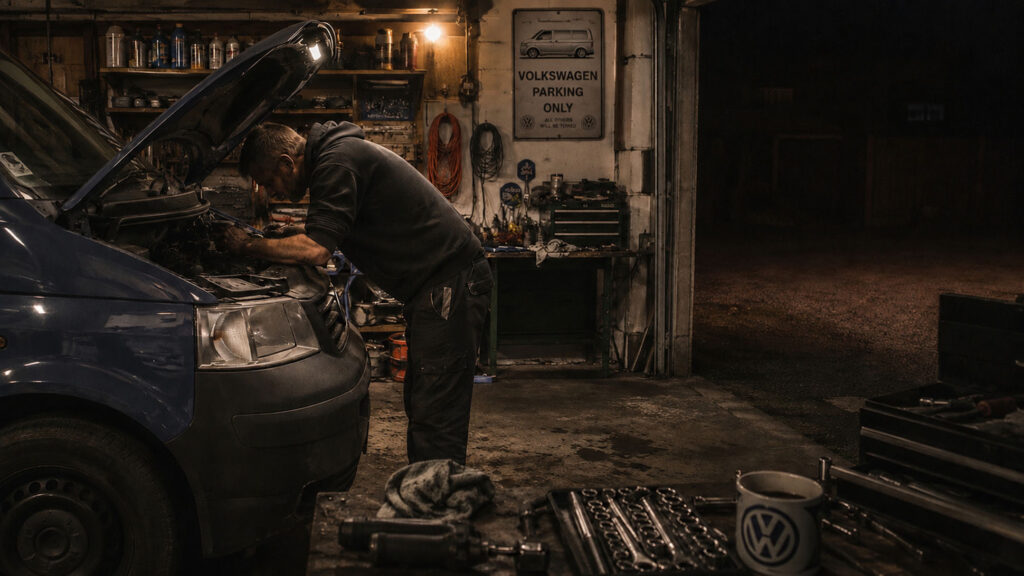
It’s coolant leaks before a camping trip.
It’s snapped exhaust bolts at 11pm.
It’s spending two hours looking for a tool that was in your pocket the entire time.
It’s YouTube tutorials paused every thirty seconds while your hands are covered in oil.
Garage life is rarely glamorous, but that’s exactly why people connect with it.
Because it feels real.
There’s no filter in a cold garage at midnight with grease on your hands and a road trip planned for Friday morning.
Most VW owners know the routine:
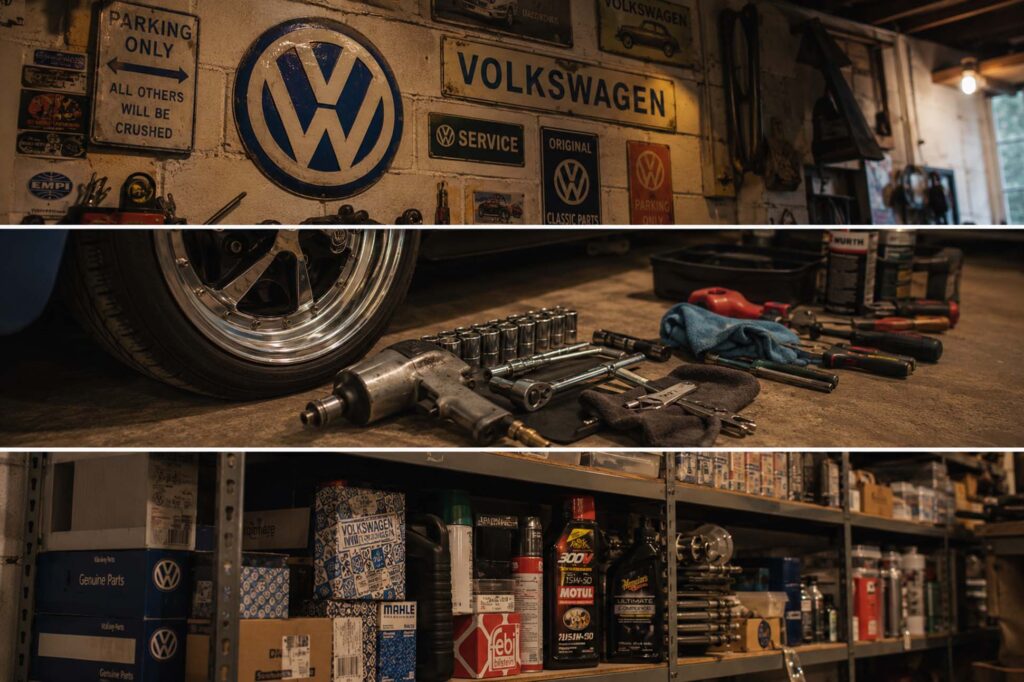
Many owners rely on suppliers like AUTODOC when sourcing parts for older Volkswagen projects, especially when trying to keep ageing T4s and T5s on the road.
And somehow, despite all of it, people still love the process.
Sometimes more than the finished van itself.
Over time, the garage stops being just a place to work on vehicles.
It becomes part of the identity.
The walls fill with old number plates, VW signs, stickers from shows and shelves stacked with spare parts “that might come in useful one day.”
Friends start dropping round just for a chat.
One person brings tools.
Another brings coffee.
Somebody always says:
“While we’re here, we may as well…”
And suddenly it’s midnight again.
That’s how real VW culture grows.
Not through algorithms or advertising.
Through shared experience.
The garage is where people learn. It’s where knowledge gets passed around between generations. It’s where first engine rebuilds happen, where road trips get planned, and where ideas for future projects usually begin.
Even kids growing up around Transporters remember garage life vividly:
the smell of polish, heaters running in winter, and parents preparing vans before shows.
Those memories become part of the culture too.
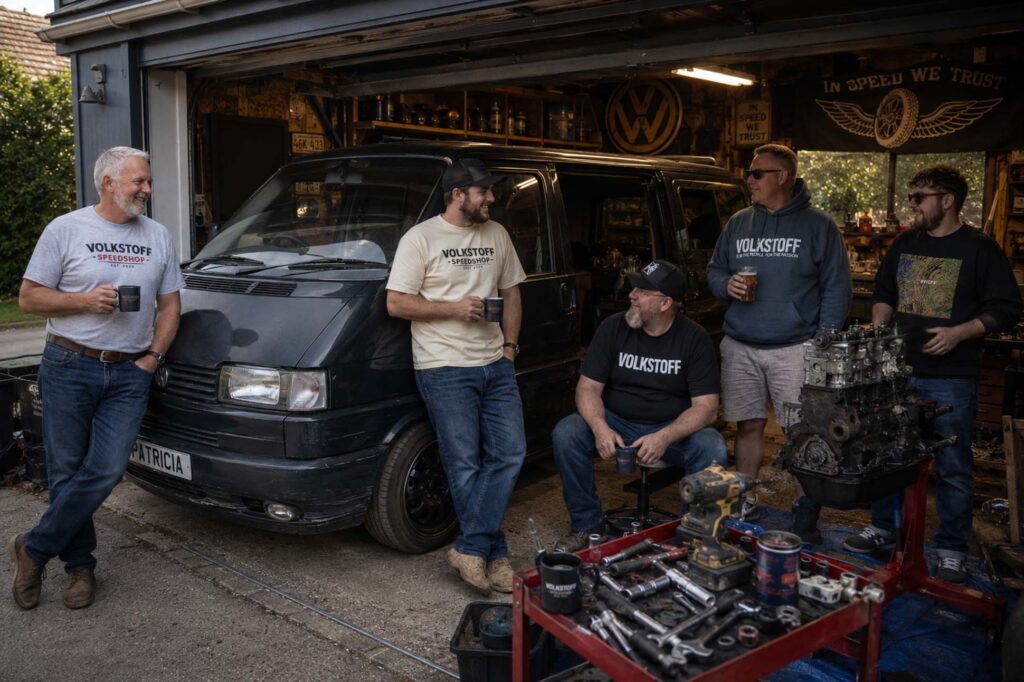
One of the best parts of VW garage culture is how quickly strangers become mates.
Especially when something goes wrong.
Somebody posts a photo of a leaking hose in a Facebook group and within minutes there are twenty comments trying to help diagnose it.
People lend tools.
Recommend mechanics.
Send spare parts.
Stay on video calls helping complete strangers fix issues in the dark.
That sense of community is rare now.
But it still exists strongly in the VW scene because most owners understand the same frustrations.
Every generation has its shared suffering:
And somehow, struggling through those problems together creates connection.
That’s why garages matter.
They’re not just workshops.
They’re meeting places.
That’s what makes VW garage culture feel different from most modern car scenes.
The longer somebody owns a Volkswagen, the harder it becomes to separate the vehicle from life itself.
The van becomes attached to memories.
First festivals.
First holidays abroad.
Dogs sitting in the passenger seat.
Relationships.
Breakups.
Family camping trips.
Late-night drives home from shows.
Every scratch tells a story.
Every modification reflects a different chapter of ownership.
That emotional connection is why people spend years rebuilding vans most people would scrap without hesitation.
Because to the owner, it’s never just metal.
It represents time, effort, identity and experience.
And most of those memories begin in the garage.
For many owners, VW garage culture becomes just as addictive as driving the van itself.
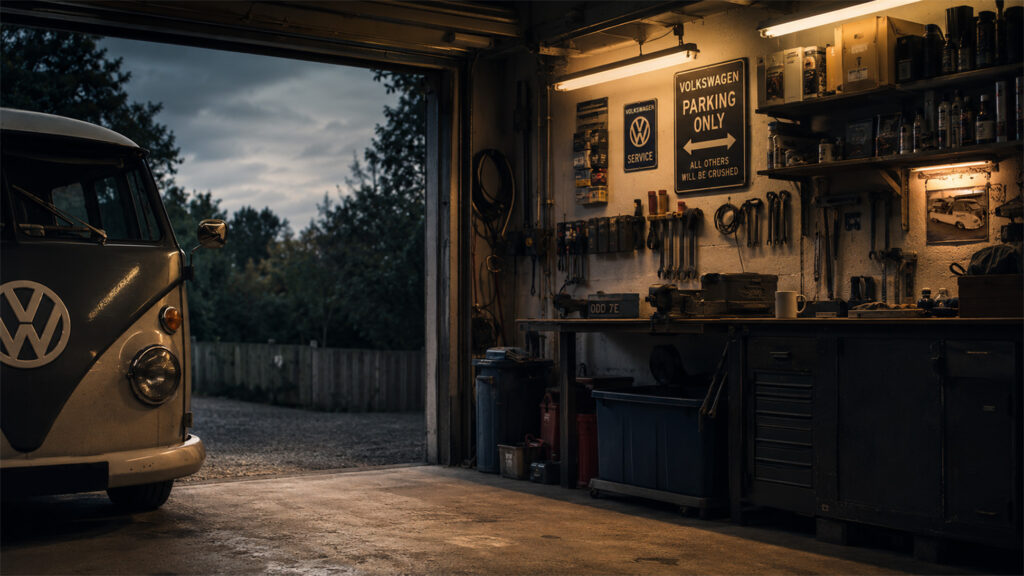
The best part of VW culture has never really been about showing off.
It’s the process.
The late nights.
The learning.
The mistakes.
The roadside fixes.
The friendships.
The feeling of finally stepping back after hours of work just to admire the van sitting quietly under garage lights.
Not perfect.
But yours.
That’s why garage life matters so much in the Volkswagen world.
The best part of VW garage culture is that every project tells a personal story.
Because long after the tools are packed away and the road trips are finished, those moments in the garage are often the ones people remember most.
For the People. For the Passion.
Garage life means something different to every Volkswagen owner. Explore more of the culture with questions like:
For the People. For the Passion.
VW garage culture refers to the community, lifestyle and hands-on ownership experience surrounding Volkswagen vehicles, especially Transporters, Beetles and classic Buses. It includes home projects, DIY repairs, restorations and social garage gatherings.
Many Volkswagen owners build strong emotional connections because their vans become part of everyday life, road trips, family memories and long-term projects.
Garage culture keeps the community alive. It’s where owners learn skills, help each other, rebuild vehicles and create friendships through shared experiences.
Most VW owners keep:
VW culture is heavily community-driven. Owners often keep vehicles for years, personalise them deeply and value lifestyle, travel and shared experience over pure performance.