

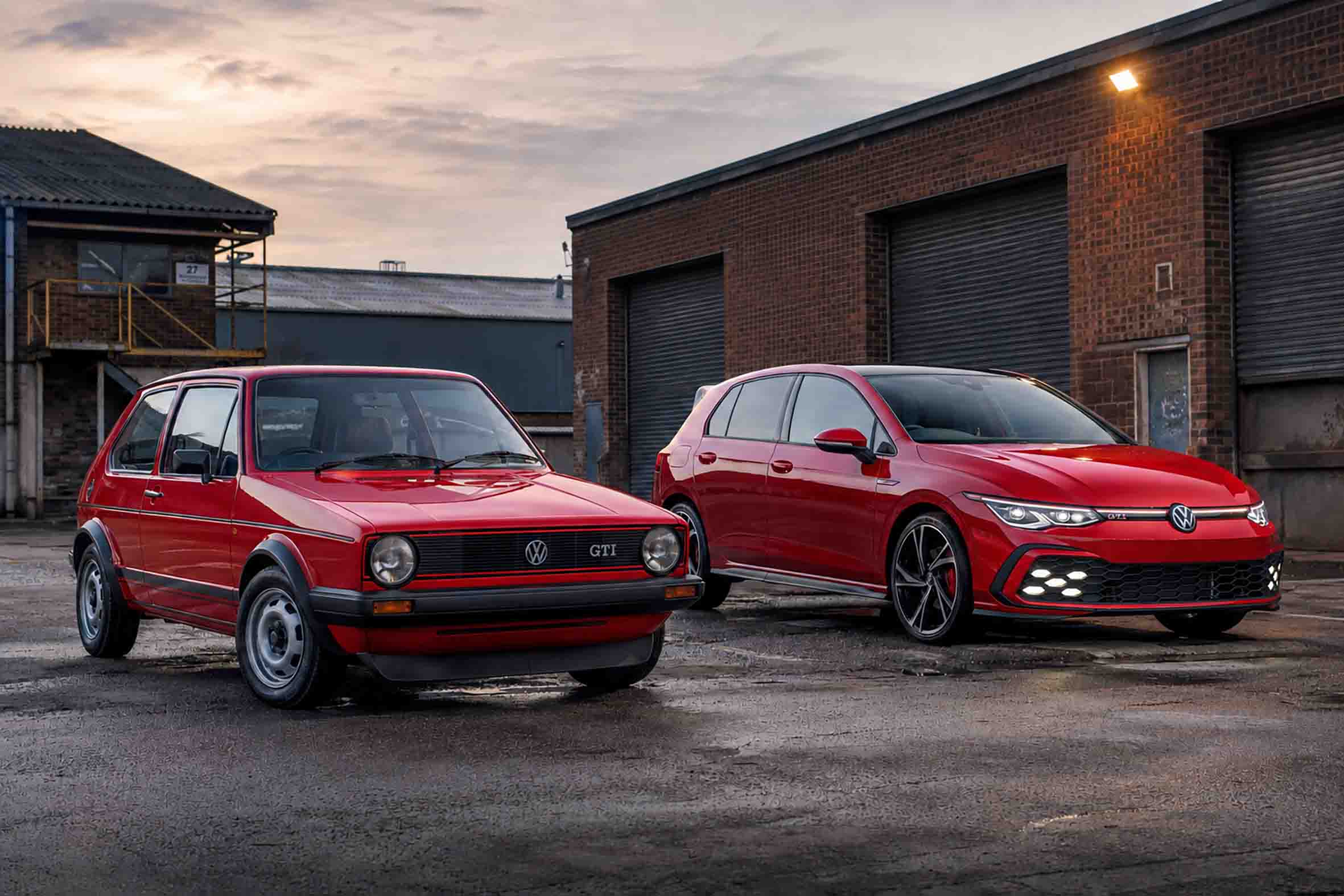
For 50 years of Golf GTI, three letters have carried an extraordinary amount of weight. They have appeared on daily drivers and track cars, immaculate show builds and battle-scarred projects, cars passed through families and examples rescued from the edge of the scrapyard. The Volkswagen Golf GTI did not earn that place through outright power or exclusivity. It succeeded because it made performance usable, attainable and relevant to ordinary drivers.
The GTI could carry the shopping, swallow a week’s luggage and commute through miserable winter traffic, yet still make a twisting road worth taking. That combination helped establish the hot-hatch formula, but the car’s greater achievement came later. Across eight generations, the GTI became woven into modifying, motorsport, magazines, clubs, shows and the wider Volkswagen community.
Looking back across 50 years of Golf GTI reveals how one practical performance car helped shape an entire community.
The first production Golf GTI reached the market in 1976, following its public debut the previous year. Its fuel-injected engine produced 110 PS, which sounds modest beside a modern performance hatch, but the number only tells half the story. The original car was compact, relatively light and mechanically straightforward. Performance did not have to compensate for excessive mass, while its front-wheel-drive layout made the car predictable and usable throughout the year.
Volkswagen initially intended to build only 5,000 examples—enough to justify the project rather than establish an entirely new performance dynasty. Demand rapidly demolished that expectation, with the Mk1 eventually selling in numbers its creators had never anticipated. (volkswagen.co.uk, volkswagen-newsroom.com)
Its importance was not that it single-handedly invented the sporting hatchback. Other manufacturers had already combined compact bodies with useful performance. The Golf GTI’s achievement was to bring the ingredients together so convincingly: a practical hatchback body, accessible running costs, sharp responses and just enough visual distinction. It gave buyers one car capable of doing several jobs without feeling compromised by any of them.
The Mk1’s red grille surround, tartan upholstery and golf-ball gear knob established a visual language that survived long after its original power figure stopped sounding remarkable. These details were playful without becoming theatrical. A GTI looked purposeful, but it did not need enormous wings or cartoon aggression to announce itself.
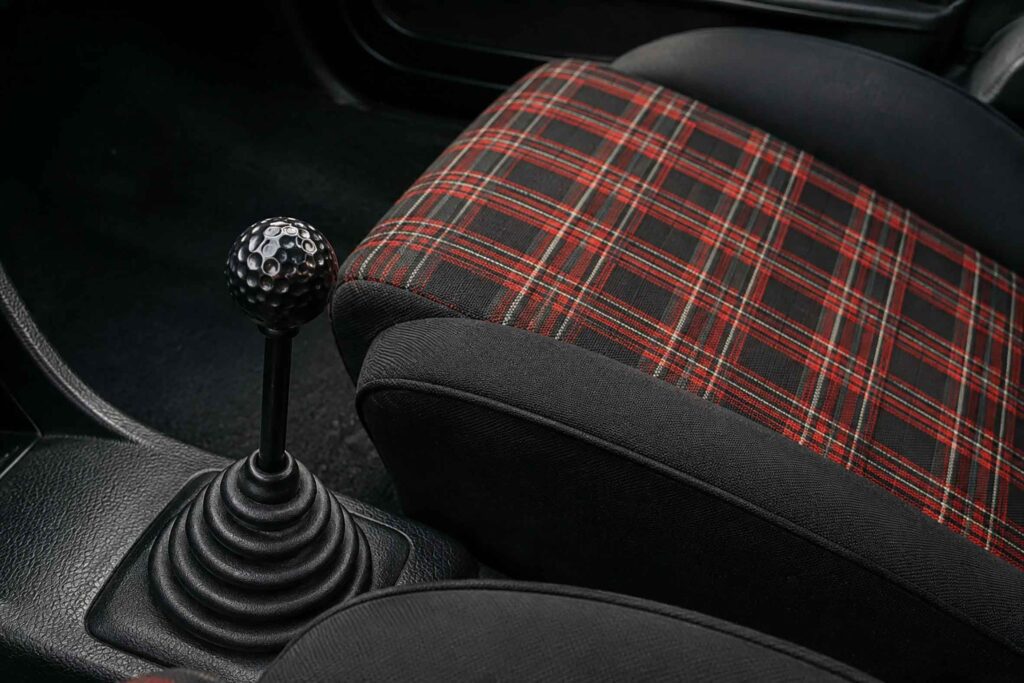
That restraint helped owners make the cars their own. Different wheels, a modest drop and a carefully chosen exhaust could transform the attitude without erasing the Golf beneath it. Equally, somebody could leave one standard and still feel part of the same world.
As the cars filtered onto the used market, they became accessible to drivers who could not have bought them new. GTIs were driven to work during the week, repaired on driveways at weekends and taken to club meets once the tools had been packed away. They appeared in classified adverts, tuning catalogues and the pages of performance-car magazines. A factory model was becoming a shared cultural reference point.
More than 2.5 million GTI models have now been produced, yet the badge has retained a recognisable identity across decades of changing technology and expectations. (volkswagen-newsroom.com)
The Mk1 supplied the blueprint, but the Mk2 gave Volkswagen tuning culture a larger canvas. Its stronger, roomier shell arrived as the European modifying industry was gathering momentum. Eight-valve, 16-valve and later G60 versions created different starting points, while the car’s simple shape responded brilliantly to period wheels, suspension changes and subtle bodywork.
For many enthusiasts, the Mk2 became the definitive modified Golf. It suited everything from restrained OEM-plus builds to stripped track cars, engine conversions and highly finished show builds. Its influence reached beyond genuine GTIs, too. Owners of ordinary Golfs borrowed the stance, trim and attitude, widening the culture rather than restricting it to one factory specification.
The Mk3 was heavier, safer and more mature. At the time, that blunted its reputation among drivers who judged every Golf against the alertness of the Mk1. Yet distance has made the Mk3 easier to appreciate. Its rounded shape now feels unmistakably ’90s, its interiors carry genuine period atmosphere and surviving cars invite creative builds without automatically demanding museum-level originality. The platform also became closely associated with VR6 conversions, wide wheels, deep suspension and the cleaner European styling that influenced British VW shows.
With the Mk4, refinement took another step forward. Its solid cabin, cleaner body and broader engine range made it a polished everyday car, although the GTI badge sometimes felt spread too widely and less focused than before. The 25th Anniversary model showed that the ingredients still worked when brought together properly. Meanwhile, the wider Mk4 platform became central to show-car culture: smoothed bodywork, air suspension, detailed engine bays, polished split rims and increasingly elaborate interiors all found a natural home on it.
The Mk5 was the reset the badge needed. The red grille detail and tartan seats returned, but the revival went deeper than styling. A turbocharged engine, capable chassis and available DSG gearbox made the car feel contemporary without abandoning the practical, front-wheel-drive formula. Volkswagen had remembered that a GTI needed a distinct personality, not simply a suitable engine and a familiar badge.
The Mk6 refined that approach, while the Mk7 expanded the car’s ability to an almost startling degree. A good Mk7 GTI could cover long distances, deal with poor weather and carry a family, then feel genuinely serious on the right road. Performance and Clubsport versions moved the limits further without turning the whole range into something unusable.
The Mk8 continued that progression with greater power, electronically managed chassis technology and a far more digital cabin. It is faster and cleverer, though criticism of touch-sensitive controls and reduced physical interaction is fair. Progress should not make the driver work harder to perform a simple task. Even so, beneath the screens and software remains the familiar attempt to balance pace with ordinary life. Volkswagen’s detailed model history records how outputs and technology developed across all eight Golf GTI generations. (volkswagen-newsroom.com, volkswagen-newsroom.com)
Across 50 years of Golf GTI, every generation has found its own audience and left a different mark on the Volkswagen scene.
That connection remains alive in cars such as Dave Keenan’s 90s-inspired Mk3 Golf GTI, where period modifications, friendship and proper road miles matter as much as outright performance.
The GTI’s influence cannot be measured solely through genuine, factory-correct examples. It changed what enthusiasts wanted from the wider Golf range and helped establish a vocabulary that still shapes modified Volkswagen culture.
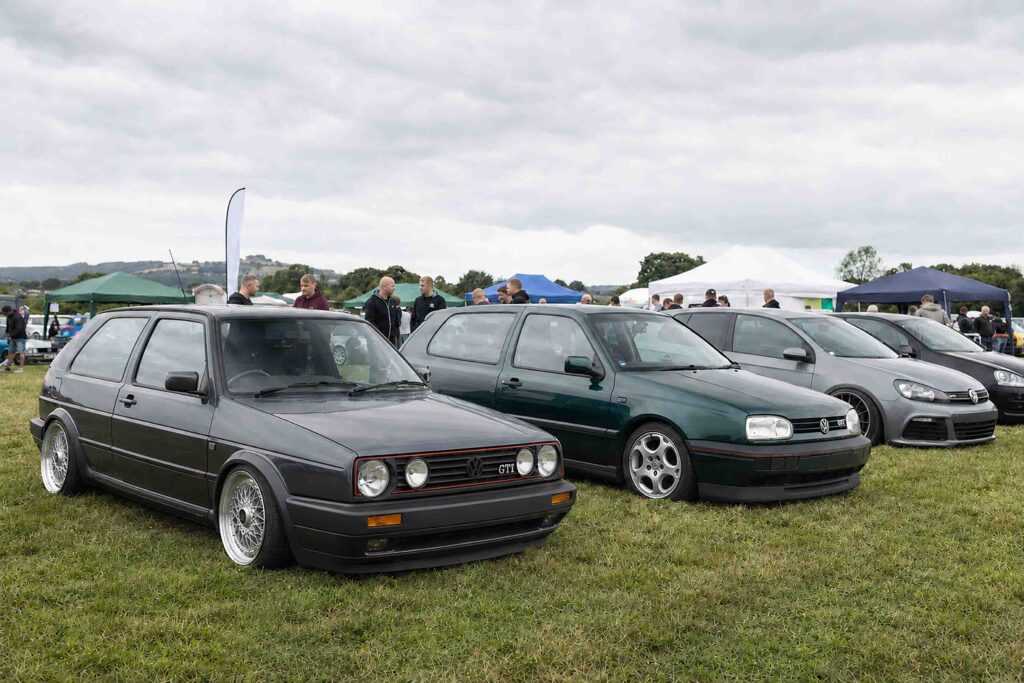
BBS wheels, carefully judged ride height and neat bodywork became familiar reference points, but the scene never settled on one approved formula. Some owners chased period correctness. Others fitted later engines into earlier shells, built turbocharged road cars, prepared lightweight track Golfs or pushed stance and wheel fitment far beyond anything Wolfsburg intended.
Richy Horton’s modified Mk1 Golf shows how far that creativity can be taken while retaining the shape, character and unmistakable attitude of the original Golf.
The Golf’s practical construction encouraged experimentation. Engines, suspension parts, brakes and interiors could be upgraded using knowledge shared through clubs, magazines, forums and now social media. A car built in a small garage could influence another hundreds of miles away.
Grassroots shows gave those builds somewhere to belong. Standard survivors parked beside home-built conversions, concours cars and daily drivers carrying stone chips from the journey. That variety is essential to Golf GTI culture. The scene grew because participation mattered more than having the most expensive car in the field.
That owner-built attitude continues in projects such as Luke’s modified Mk3 Golf, created at home with a 1.8T conversion, air suspension and carefully hunted-down rare parts.
That tension has become one of the defining issues surrounding 50 years of Golf GTI: the car built around accessible performance is becoming increasingly difficult for ordinary enthusiasts to afford.
The uncomfortable side of the Volkswagen GTI heritage is that many of the cars once available to young enthusiasts are no longer cheap. Mk1 values have been climbing for years, desirable Mk2s have followed and exceptional later cars are increasingly being treated as collectable assets.
Rarity plays a legitimate part. Many GTIs were modified, crashed, stolen, rusted away or simply used until repair no longer made financial sense. Preserving the best survivors costs money. Yet rising values also change the culture surrounding them. Owners may become reluctant to add miles, modify a car or leave it unattended, while younger enthusiasts find the cars that inspired them sitting beyond reach.
Keeping an ageing GTI alive still depends heavily on the skills, friendships and shared knowledge found throughout VW garage culture.
The modern GTI presents a similar contradiction. It offers a level of performance, safety and equipment the original could never approach, but the Edition 50’s UK starting price of £47,995 places it well above the affordable performance proposition that started the story. After 50 years of Golf GTI, that price makes the distance from the original increasingly difficult to ignore. Used cars, non-GTI Golfs and home-built projects therefore remain important gateways into the community.
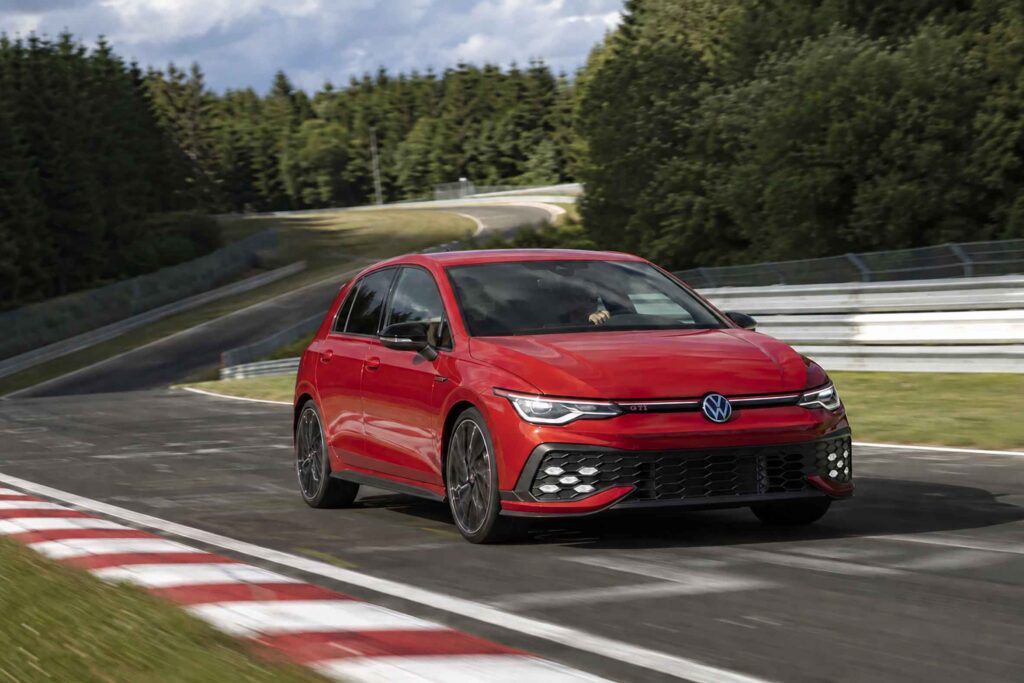
The 2026 Golf GTI Edition 50 marks the anniversary with 325 PS, making it the most powerful series-production Golf GTI yet. It is a serious performance car rather than a standard model decorated for a birthday.
Its clearest statement came at the Nürburgring Nordschleife, where Volkswagen test and development driver Benjamin Leuchter recorded a 7:44.523 lap around the 20.832-kilometre circuit. Volkswagen says that makes it the company’s fastest front-wheel-drive production model around the Nordschleife. (volkswagen-newsroom.com, volkswagen-newsroom.com)
That achievement shows how far the GTI has travelled technically. The original offered 110 PS and accessible fun; the Edition 50 produces almost three times that output and can deliver performance once associated with far more specialised machinery. The question is whether that technical capability still feels connected to the badge’s democratic beginnings.
Volkswagen’s answer is the ID. Polo GTI, the first fully electric production model to carry the GTI name. Presented with approximately 226 PS, it takes the badge beyond the petrol-powered, front-wheel-drive formula that defined the Golf for five decades. (volkswagen-newsroom.com)
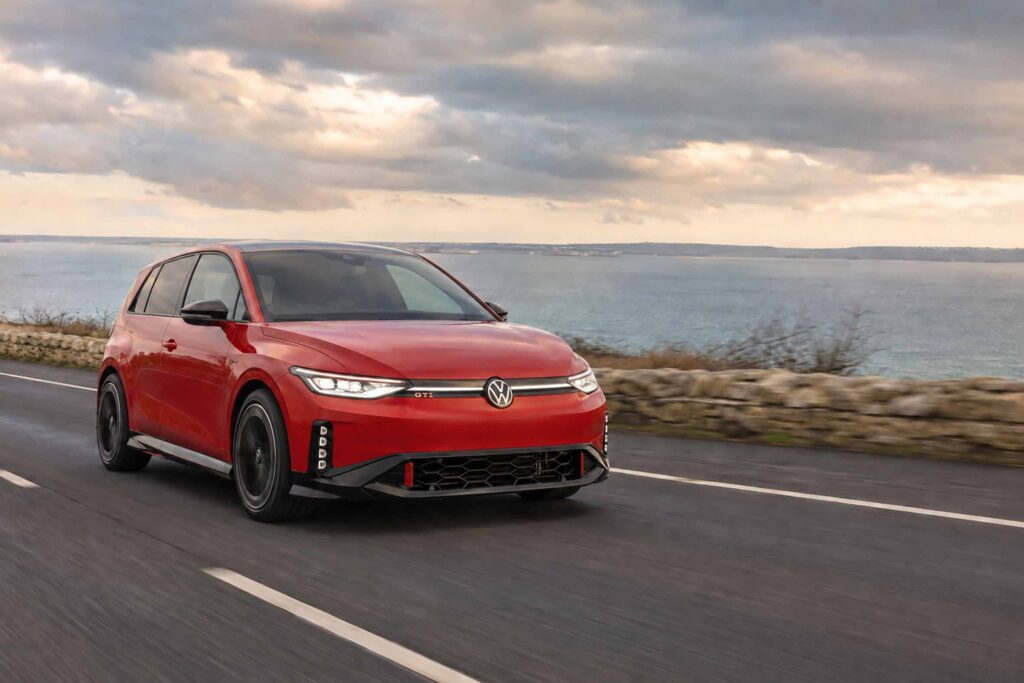
There will inevitably be scepticism. Engine response, exhaust note, gear changes and mechanical character have shaped countless GTI memories. Removing them changes the experience, and pretending otherwise would serve nobody.
However, the badge has never depended upon one engine. The Golf GTI moved from naturally aspirated eight-valve units to 16-valve engines, supercharging, turbocharging and increasingly sophisticated electronic control. What remained was the ambition to package usable performance inside an attainable everyday car.
The electric GTI will earn its badge only if it feels responsive, engaging and approachable—not because the lettering appears on its boot. If the ID. Polo GTI can give a new generation an affordable route into performance-car ownership and encourage a community to form around it, the change of power source need not erase the underlying idea.
The story of 50 years of Golf GTI belongs as much to owners as it does to Volkswagen. The factory created the cars, but people gave them their wider meaning. They raced them, modified them, restored them and used them until the bolsters wore through. They founded clubs, organised shows, filled magazines and passed hard-earned knowledge across generations.
That is why the GTI still matters. Not because every version was perfect, nor because the badge guarantees greatness, but because the basic proposition remains powerful: useful performance, recognisable character and an open invitation to participate.
Whether the next chapter smells of petrol or arrives almost silently, it must remain connected to the ordinary enthusiasts who built the culture around those three letters.
For the People. For the Passion.