
There’s a photograph somewhere in Sarah’s VW camper story that tells you almost everything you need to know about why Volkswagen vans become more than transport.
It’s 1999. Sarah is in Brixham, Devon, sitting on the roof of a 1967 Volkswagen Split Screen watching a solar eclipse.
No concours lawn. No trophies. No carefully positioned show car with a spec sheet propped against the windscreen. Just a woman, an old Volkswagen and one of those moments that somehow stays with you for the rest of your life.
More than 25 years later, Sarah has another Volkswagen van in her life.
His name is Stan.
And while Sarah might jokingly describe the whole thing as a menopausal midlife crisis, the truth is that Stan’s arrival has been a very long time coming.
Sarah’s relationship with Volkswagen culture stretches back to her first Run to the Sun in Newquay in 1989.
It was a period when surf culture, alternative car scenes and an emerging generation of modified Volkswagens seemed to naturally collide. Sarah was also heavily involved in the rave scene, and cars became part of that life of music, travelling and disappearing off in search of the next adventure.
She remembers those early Run to the Sun days as innocent fun — driving through the streets of Newquay, water pistols in hand, surrounded by the atmosphere of the VW scene.
It fitted perfectly with the life she was already living.
DJs. Dancing. Music. Cars.
Sarah fell in love with Volkswagens.
Her first personal taste of VW ownership wasn’t quite as romantic.
There was a Polo.
It overheated.
Then it overheated some more.
Eventually Sarah had enough and, for her 21st birthday, found herself with a Ford XR2. The need for speed had temporarily won.
But Volkswagen hadn’t quite finished with her.
A Beetle followed, and Sarah started trying to create the Cal-look style she loved, including an ambitious attempt at de-seaming it.
By her own admission, that didn’t go particularly well.
But that was part of car culture. You saw something you liked, went home and had a go.
Sometimes it worked.
Sometimes it really didn’t.
That first trip to Newquay became the opening chapter in a VW camper story that would stretch across more than three decades.
Then came another chapter.
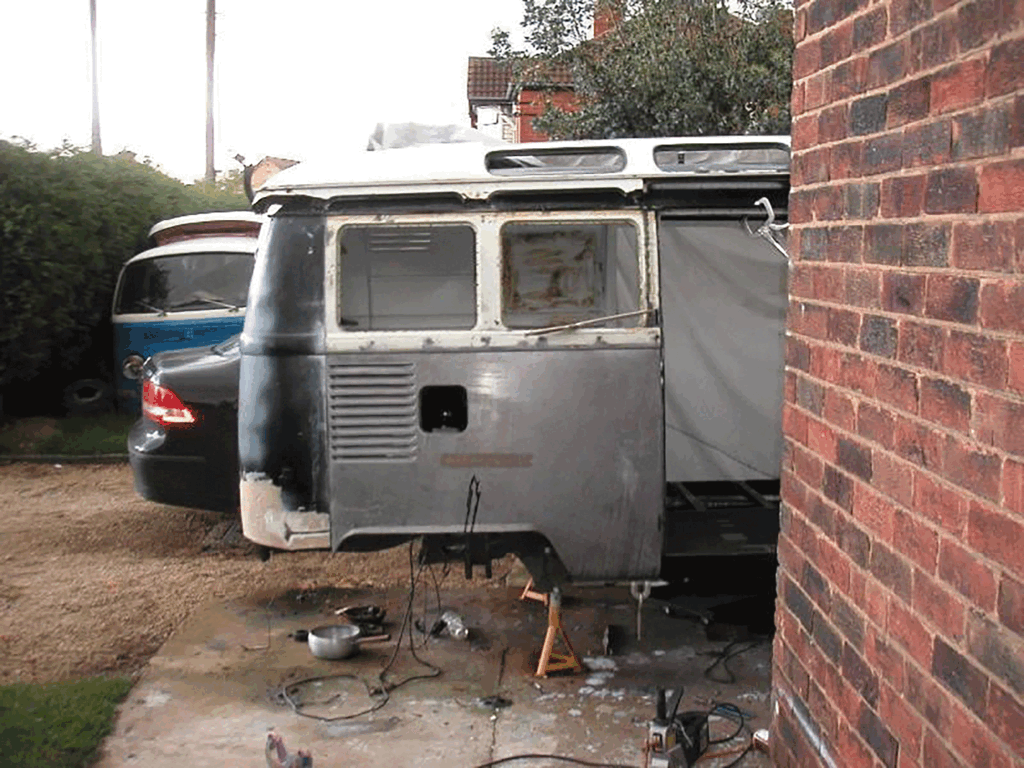
A 1967 Volkswagen Split Screen.
And with it came some of the memories that still stand out all these years later.
Sarah remembers sitting on the roof of the Split in Brixham watching the solar eclipse — one of those moments where the vehicle becomes almost secondary to the memory created around it.
That’s something Volkswagen people understand.
Years later you might forget exactly what wheels were fitted or what part needed replacing that weekend.
You don’t forget where the van took you.
There is a tendency when telling people’s automotive stories to pretend the cars existed in isolation.
They don’t.
Life gets in the way.
Relationships happen. Families happen. Priorities change. Cars are sold, projects disappear and sometimes a part of yourself gets packed away with them.
Sarah’s VW years gradually gave way to other parts of life.
The relationship connected to the Split eventually ended and the van went with it — something Sarah can now look back on and question with a smile.
She later married, had her son Joe, and eventually found herself single again.
For 16 years, the idea of owning another van remained exactly that — an idea.
But the VW world has a funny habit of pulling people back.
Friends involved with AnyDub were heading away in their vans, doing shows, camping and making memories together.
Sarah watched it happening.
And she was envious.
Eventually watching wasn’t enough.
There comes a point where you can keep finding reasons not to do something, or decide that life is moving whether you’re ready or not.
Sarah decided to do it.
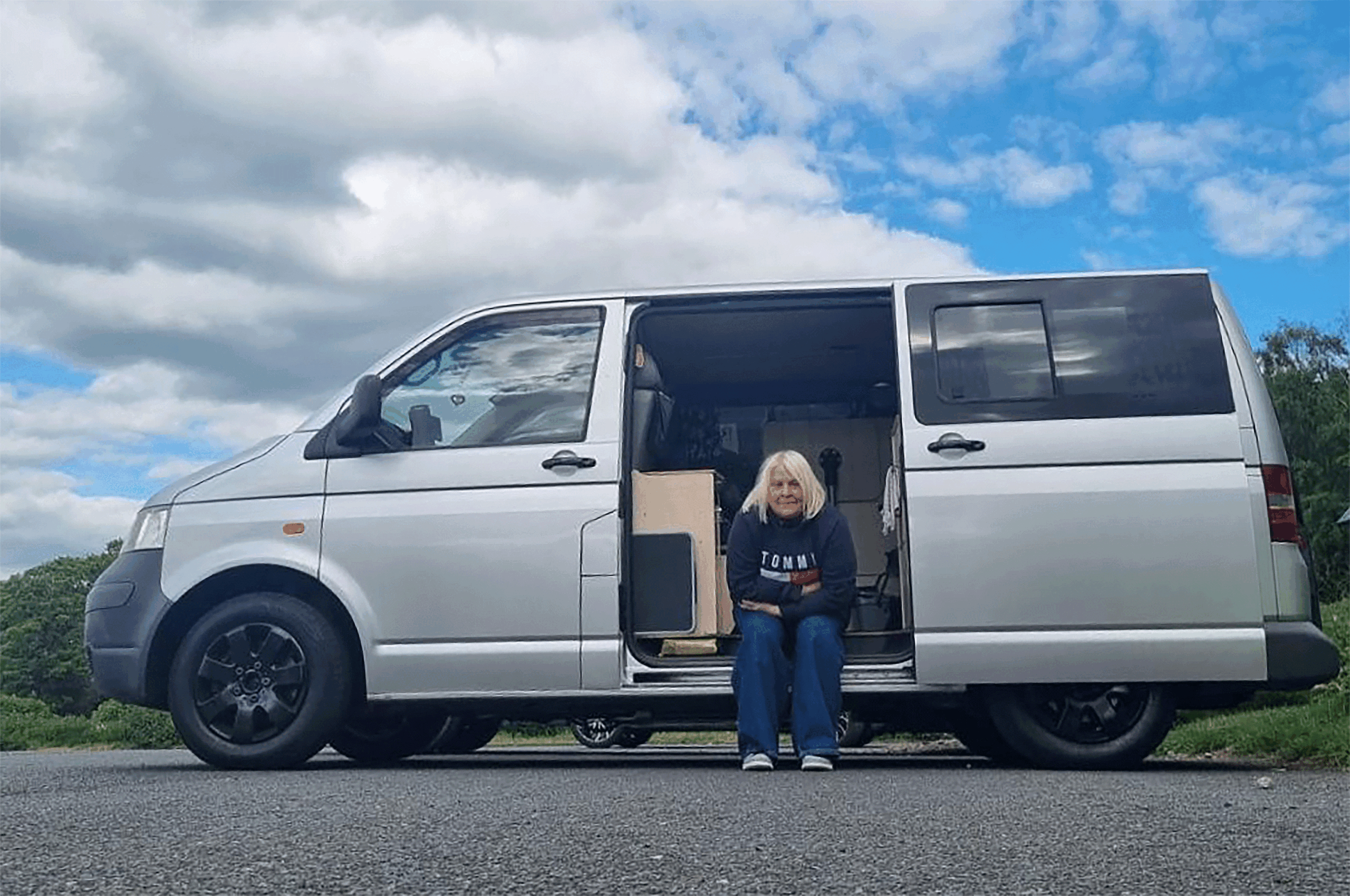
Stan arrived.
There was a slight problem.
Sarah’s heart was — and still is — with Split Screens.
Her bank balance and the practical realities of actually owning and using one had other ideas.
So the dream changed shape.
Instead came a 2004 Volkswagen T5.
Stan had two previous owners and had been converted around 15 years earlier by Angel Amdro. Sarah knows of only one other van with the same conversion.
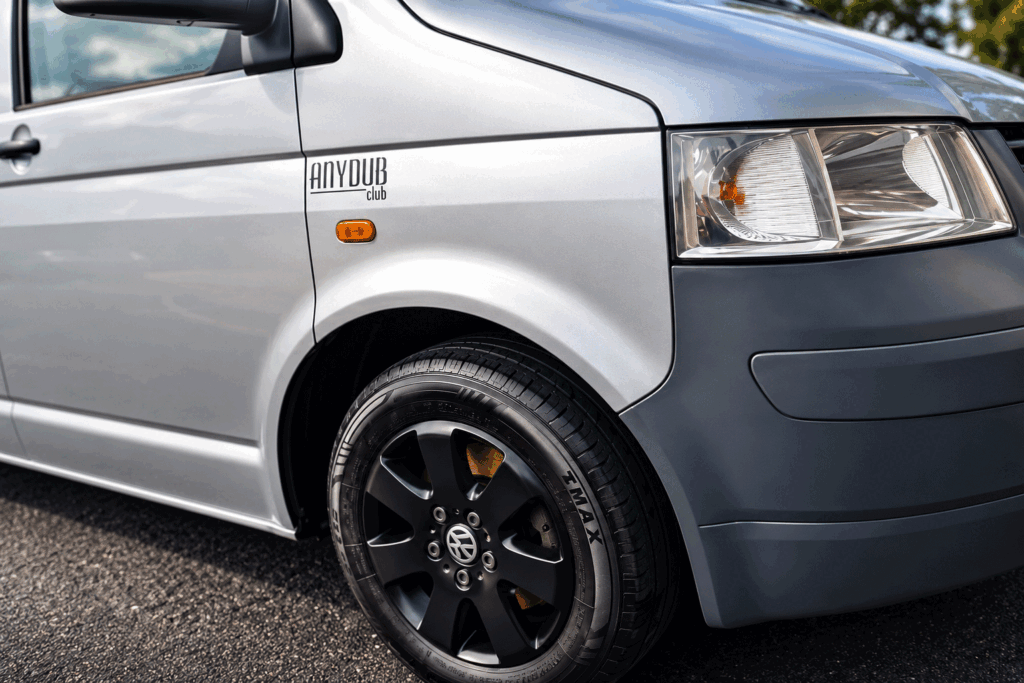
Rather than immediately ripping him apart, she’s chosen to keep much of his original character, bumpers included.
Apparently that means she doesn’t get quite as many waves.
Somehow, she’s coping.
Because Stan wasn’t bought to impress the person driving the other way.
He was bought for Sarah.
Stan might be the latest chapter in Sarah’s VW camper story, but he carries pieces of everything that came before him.
And the name itself makes that even more apparent.
Names matter in camper culture.
Spend enough time around a VW meet and you’ll quickly realise that many vans stopped being anonymous vehicles a long time ago.
Stan’s name, however, carries considerably more meaning than most.
Sarah named him after her dad.
Now in his 90s, her father spent years working as an antique dealer and became known as “Stan with the van.”
Decades later, his daughter has a van of her own carrying the same name.
It’s a small family connection, but perhaps that’s exactly why it matters.
Stan isn’t simply a name stuck onto a camper because it sounded good.
It’s part of Sarah’s family story.
Dad was Stan with the van.
Now Sarah has Stan the van.
Ask Sarah about Stan and you don’t get a technical lecture.
That’s important.
The automotive world can sometimes make people believe they need to know everything before they’re allowed to belong. Engine codes, suspension setups, wheel offsets and endless lists of modifications can become an unofficial entrance exam.
Sarah doesn’t pretend to be that person.
In her own words, she’s “just a girl with a van.”
But perhaps that’s precisely why her story deserves telling.
Because Volkswagen culture was never supposed to belong exclusively to whoever can recite the longest specification list.
Sarah’s connection with Stan is about what happens once the engine is switched off.
It’s festivals.
It’s travelling.
It’s pulling up somewhere and making that little patch of ground home for the weekend.
It’s sitting outside a van with friends, chatting and laughing until the early hours of the morning.
And it’s meeting people who might never have entered your life without a Volkswagen sitting somewhere in the middle of it all.
One of the biggest things Stan has brought into Sarah’s life isn’t mechanical at all.
It’s friendship.
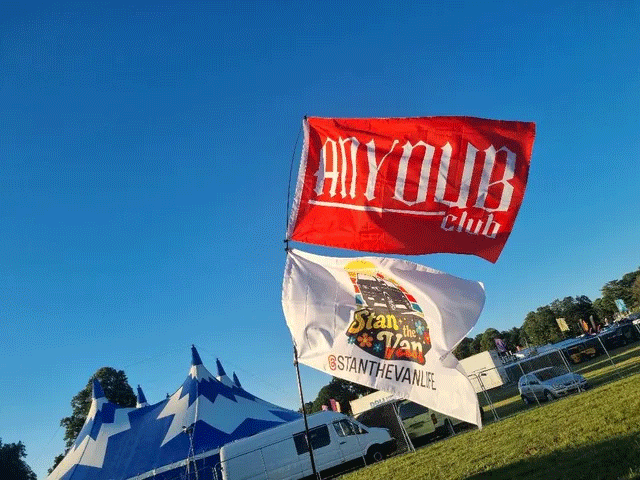
Since buying him, Sarah says she’s made some genuinely close friends.
“Real friends,” as she puts it.
That’s the part of car culture that’s almost impossible to explain from the outside.
You can buy a van without joining a community.
But once you start attending shows, camping together, travelling and recognising the same faces in fields around the country, something changes.
The vehicles become the introduction.
The people become the reason you keep coming back.
Like so many good VW camper stories, the van might start the conversation, but the people are what make it matter.
For Sarah, Stan has opened that door.
And after years of watching other people enjoying those experiences, she’s now creating her own.
Her son Joe apparently thinks she might even love Stan more than him.
Sarah strongly denies the accusation.
Although she does concede that Stan is a close second.
Sarah jokes about being in her 50s, menopausal and having a midlife crisis.
We’ll let her decide how much truth there is in that.
But there is something much more interesting underneath the joke.
There will be women reading this who have stood at VW shows, watched friends head away for weekends or scrolled through pictures of campers travelling around the country and quietly thought:
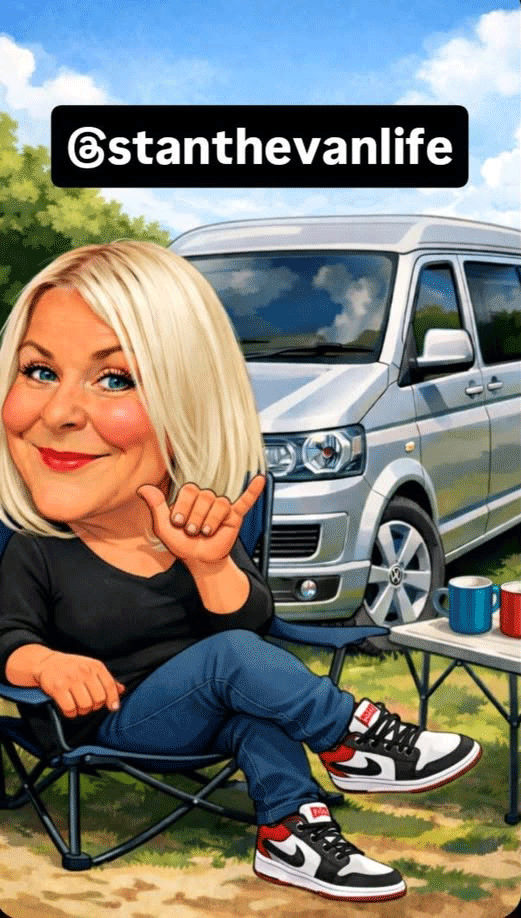
I’d love to do that.
Then come the reasons not to.
I don’t know enough about vans.
I wouldn’t know where to start.
It’s too late.
I’d look stupid.
What happens when something breaks?
The scene is mostly blokes.
Sarah’s story doesn’t answer those questions with some grand motivational speech.
She simply bought the van.
And got on with it.
That’s far more powerful.
You don’t have to build the engine yourself to love the vehicle. You don’t need twenty years of mechanical knowledge to turn up at a show. And you certainly don’t need anyone else’s permission to become part of the VW community.
If you love the lifestyle, the people, the journeys and the memories these vehicles create, you’re already beginning to understand it.
Sarah is quite happy to laugh at herself.
Maybe Stan is a midlife crisis.
If so, we can think of considerably worse ones.
Because somewhere between that first Run to the Sun in Newquay in 1989 and buying another van decades later, life changed enormously.
The world changed too.
But the basic appeal of the VW camper didn’t.
It still represents escape.
The ability to throw some stuff in the back, point it somewhere and go.
It creates conversations with complete strangers at petrol stations. It gives you an excuse to spend weekends standing in fields. It introduces people who would otherwise never have met and somehow turns them into friends.
And sometimes it gives you somewhere to retreat when the rest of life gets a little too loud.
For Sarah, that sentence perhaps says more about Stan than any specification sheet ever could.
Because Stan isn’t just about going somewhere.
Sometimes he’s simply somewhere to be.
Sarah’s VW camper story isn’t really about owning the perfect Volkswagen. It’s about rediscovering freedom, friendship and a part of herself that never completely disappeared.
When Sarah described what Stan means to her, she didn’t talk about his value.
She didn’t give us a modification list.
She didn’t tell us what other people thought of him.
She gave us five words.
“Stan is my happy place.”
That’s it.
And maybe that’s the whole point.
Our vehicles don’t always need to be the fastest, rarest, lowest or most expensive thing in the field.
Sometimes their greatest value is simply the way they make us feel.
A van can be transport.
It can also be the place where you drink your morning coffee after waking up somewhere new.
It can be where friendships begin.
It can carry memories of the people who came before us — even something as simple as a dad once known as “Stan with the van.”
And it can remind you that starting another chapter of your life doesn’t require anyone else’s permission.
Sarah might describe herself as just a girl with a van.
We think that’s more than enough.
Because Volkstoff has never been about who knows the most, who spends the most or who owns the most desirable Volkswagen.
It’s about the people who keep this culture alive by actually living it.
Sarah and Stan are doing exactly that.
Not trying to recreate her twenties.
Not trying to prove anything.
Just Sarah, Stan and whatever comes next.
And if that’s a midlife crisis?
We reckon she’s doing it properly.
VOLKSTOFF
For the People. For the Passion.