

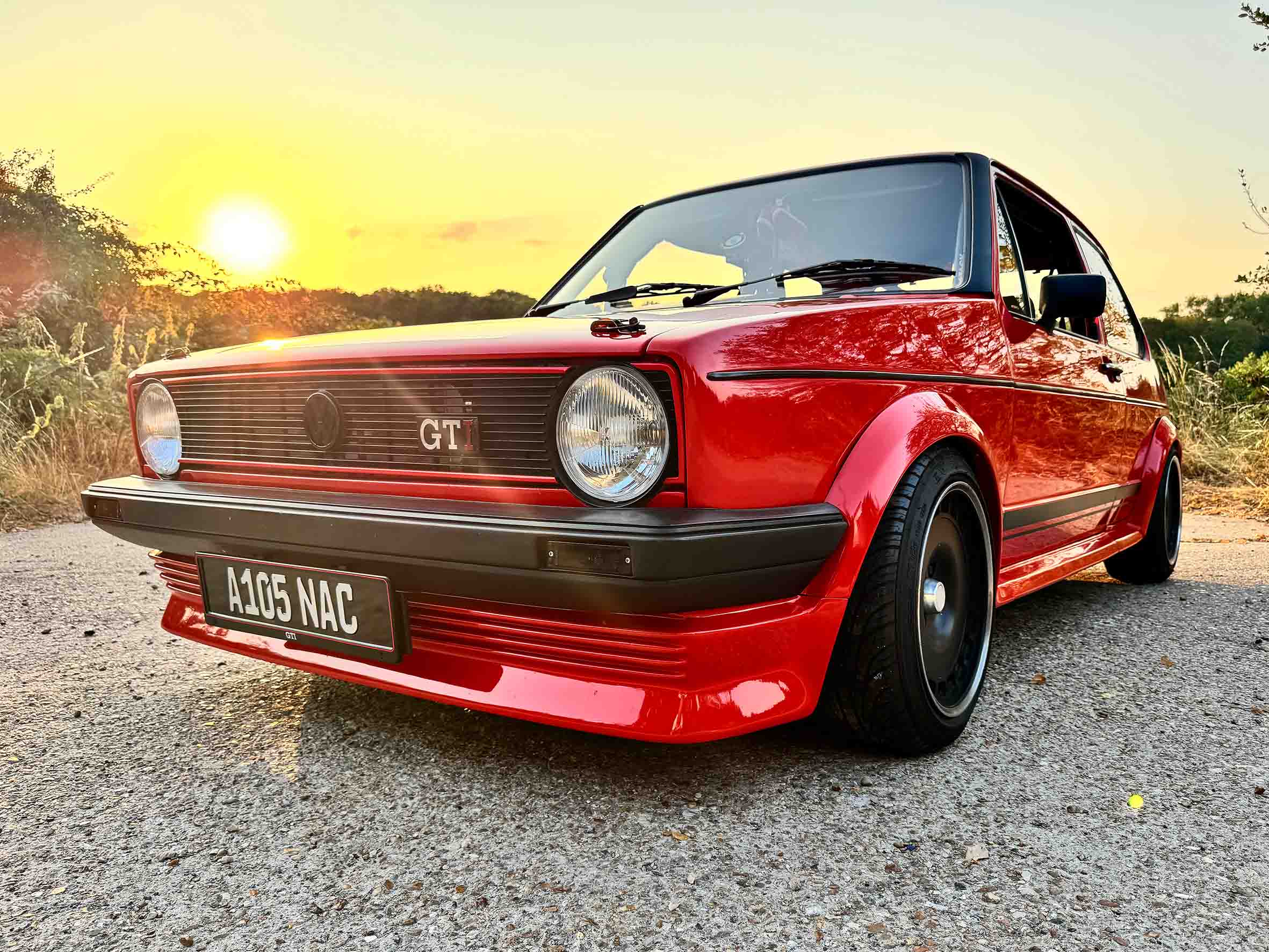
Some modified Volkswagens make their intentions obvious before you know anything about them. Others become more interesting the longer you look.
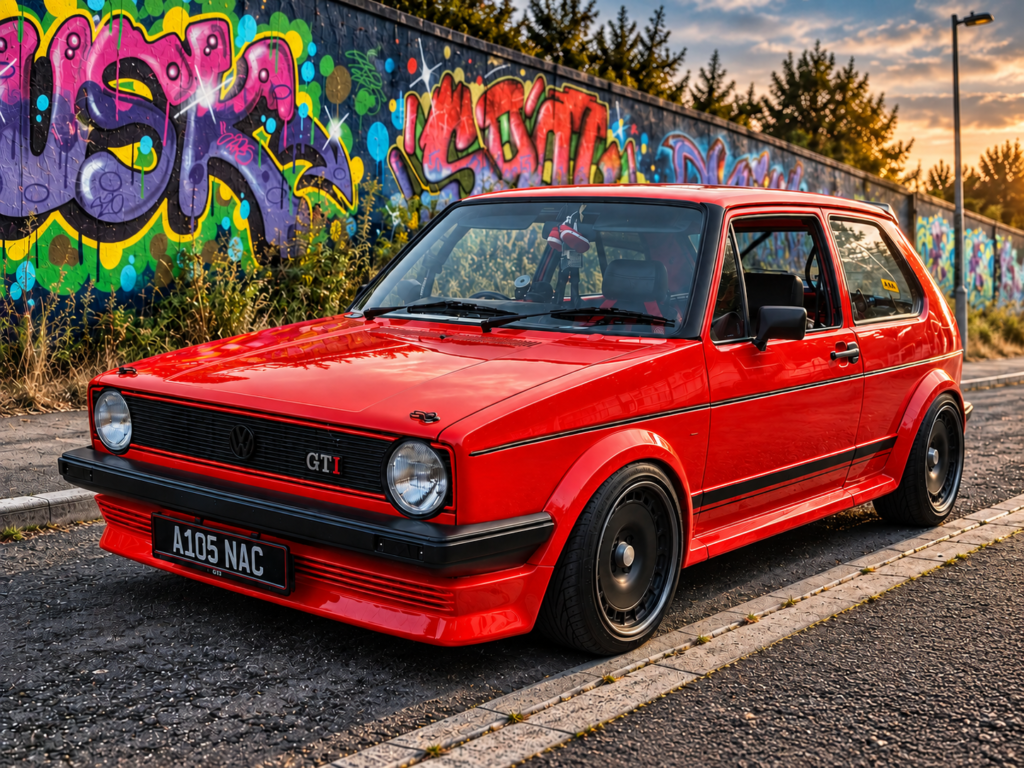
Richy Horton’s red Volkswagen Golf Mk1 sits firmly in the second camp.
Low, purposeful and unmistakably old-school, it would already make a strong case for a closer look on appearance alone. But underneath the familiar Mk1 shape is an Audi TT-sourced 1.8-litre 20-valve turbo engine, while behind the modifications lies something even more interesting: a previous life in competition.
According to the history and paperwork that came with the Golf, the car was used in competition around 1999 to 2001, potentially earlier. Evidence of that former life still exists within the car today.
What Richy has now isn’t a restored competition car, though, and it isn’t trying to be one.
Instead, this is an old Volkswagen that has continued to evolve — from competition machine to turbocharged road car, and now into something Richy can enjoy with his family.
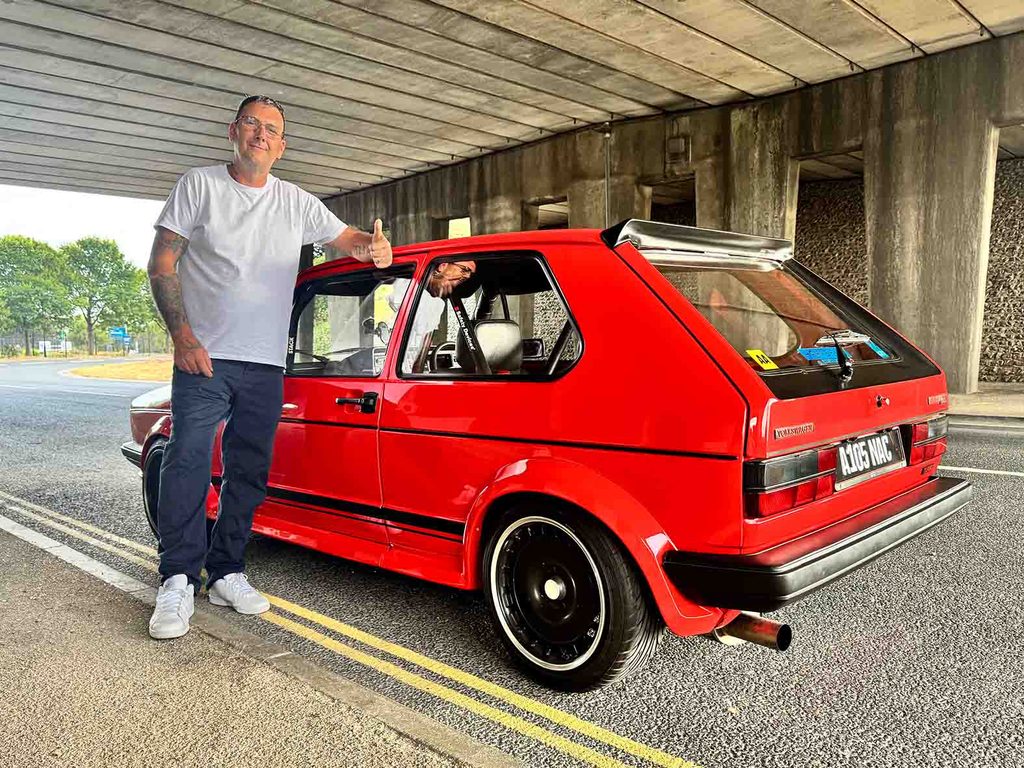
Lift the bonnet and the Golf’s current personality becomes much clearer.
The original powertrain has made way for an Audi TT-sourced 1.8-litre 20-valve turbo engine. The conversion was already installed when Richy bought the Golf, giving him a very different starting point from someone beginning with a standard Mk1.
The Mk1 sits at the beginning of a GTI story that has now lasted half a century, something we explored in our 50 Years of the Golf GTI feature.
The engine is now running a Stage 2 setup with launch control, and Richy estimates that it is producing somewhere around 300bhp.
That figure is important to put into context: the Golf hasn’t yet been on a rolling road to confirm it, so we’re treating 300bhp as Richy’s estimate rather than a proven dyno figure.
Even so, there’s not much Volkswagen to move.
Richy puts the Golf at roughly 950kg with him aboard. Combine that sort of weight with a turbocharged 20-valve engine and you don’t need a calculator to understand why this little red Golf should be properly entertaining.
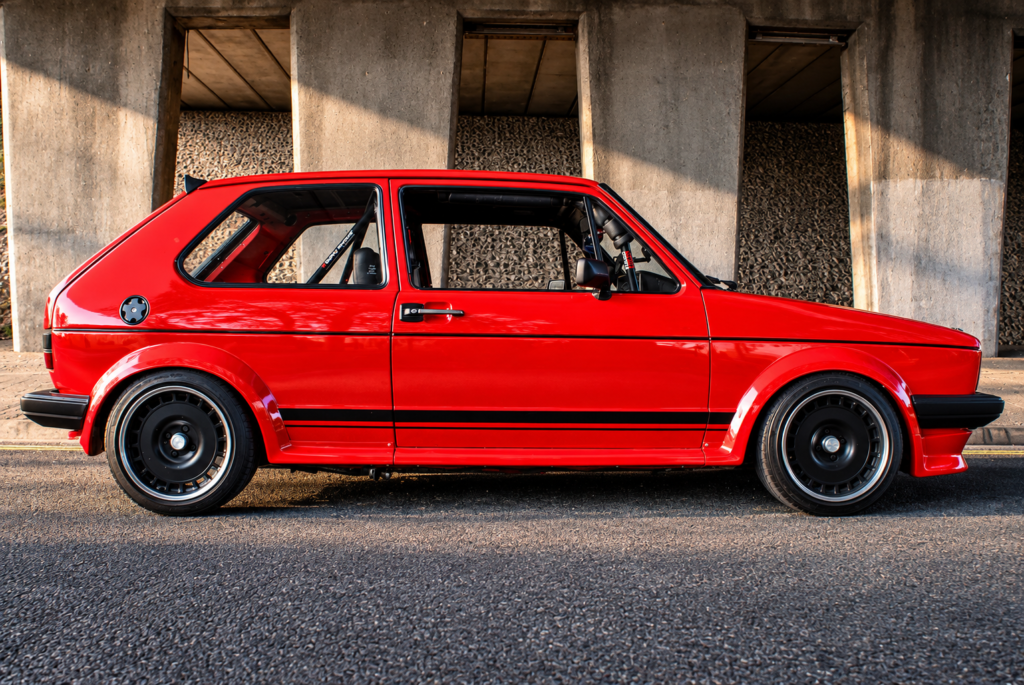
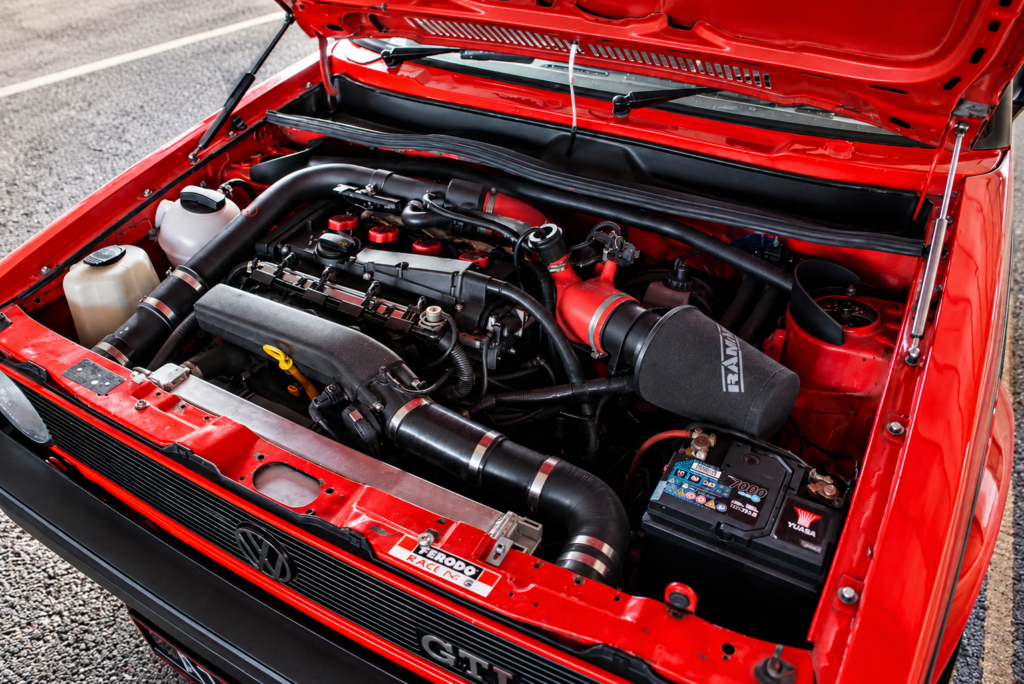
The Mk1 GTI itself dates back to 1976, when Volkswagen launched the original production GTI.
The engine might grab your attention first, but it isn’t actually the most interesting part of this Golf.
That comes from its history.
The paperwork accompanying the car points to competition use around the turn of the millennium, approximately 1999 to 2001, with the possibility that its involvement goes back further.
The history file also contains motorsport-related documentation and an historic photograph connected with that period of the Golf’s life. Among that paperwork is an MSA Competition Car Log Book, recording the Golf’s sporting discipline as Stage Rally.
Richy is still trying to uncover more.


And that’s worth stressing, because there is an important difference between a road-going Mk1 modified to look like a competition car and an old Golf carrying evidence of a genuine previous life in motorsport.
This one has a story that existed long before its current incarnation.
During its competition days the Golf was lightened, with unnecessary equipment removed and safety equipment added. It was also equipped with a proper fire-extinguisher system.
Some of that former preparation has disappeared as the car has evolved. Other parts remain.
Most obviously, there’s still a roll cage inside.


Rather than attempting to recreate exactly what the Golf once was, Richy is gradually piecing together that history while continuing to move the car forward.
That distinction makes the project far more interesting.
Its past hasn’t dictated what the car must become.
It’s simply become another layer of its character.
Richy inherited the engine conversion, but the Golf certainly hasn’t stood still since arriving in his hands.
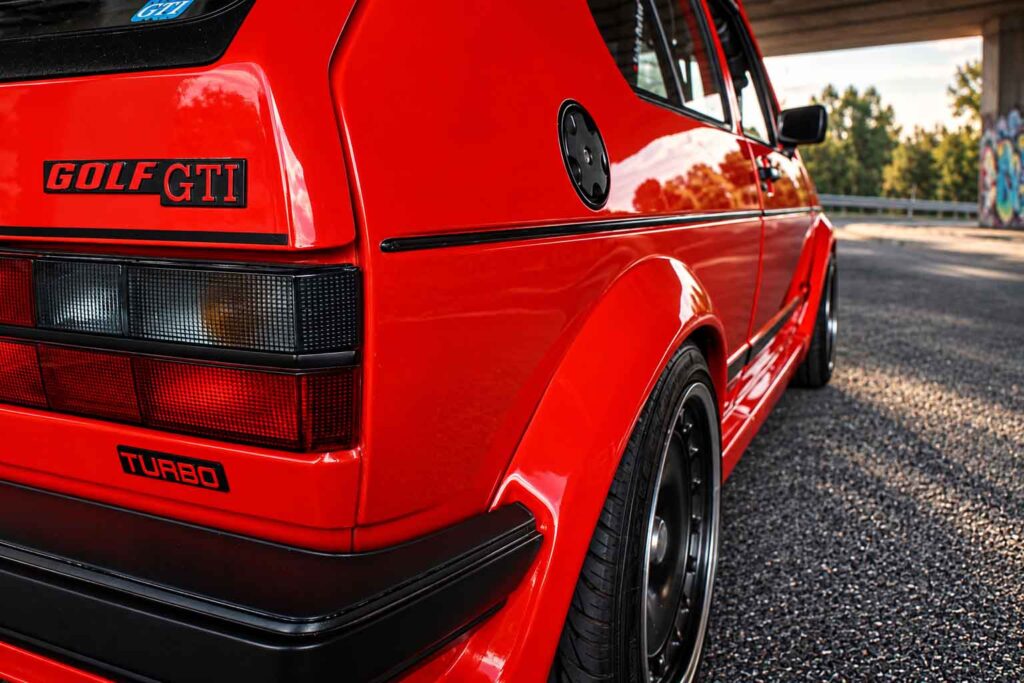
He’s fitted the BBS body kit, changed the indicators and headlights, fitted different mirrors and added the side graphics. The wheels came from a friend, while a Sacex 8160 spoiler adds another distinctive detail to the car’s current appearance.
Underneath, the Golf sits on BC coilovers.
Then there are the less glamorous realities of owning an old Volkswagen.
Corrosion has needed attention and Richy has continued renewing parts and dealing with problems as they appear.
That’s perhaps a more accurate representation of modified VW ownership than any finished specification list could provide.
These cars are rarely ever truly finished.
There’s also an interesting contradiction inside. It’s something we’ve seen elsewhere in the scene too, including in our feature on Luke’s modified Mk3 Golf.
At one point the Golf had bucket seats, which would make perfect sense considering its competition background. Richy has instead put a full interior back into the car.
Why?
Because he wants his family to be able to enjoy it too.
It’s a small decision that says quite a lot about what the Golf has become.
This isn’t a competition car being preserved behind a garage door. Nor is it a stripped-out road car that only comes out when conditions are perfect.
Richy wants to use it.
Spend enough time around Volkswagen enthusiasts and you’ll notice how often one car leads back to another.
For Richy, the Volkswagen connection didn’t begin with this Mk1.
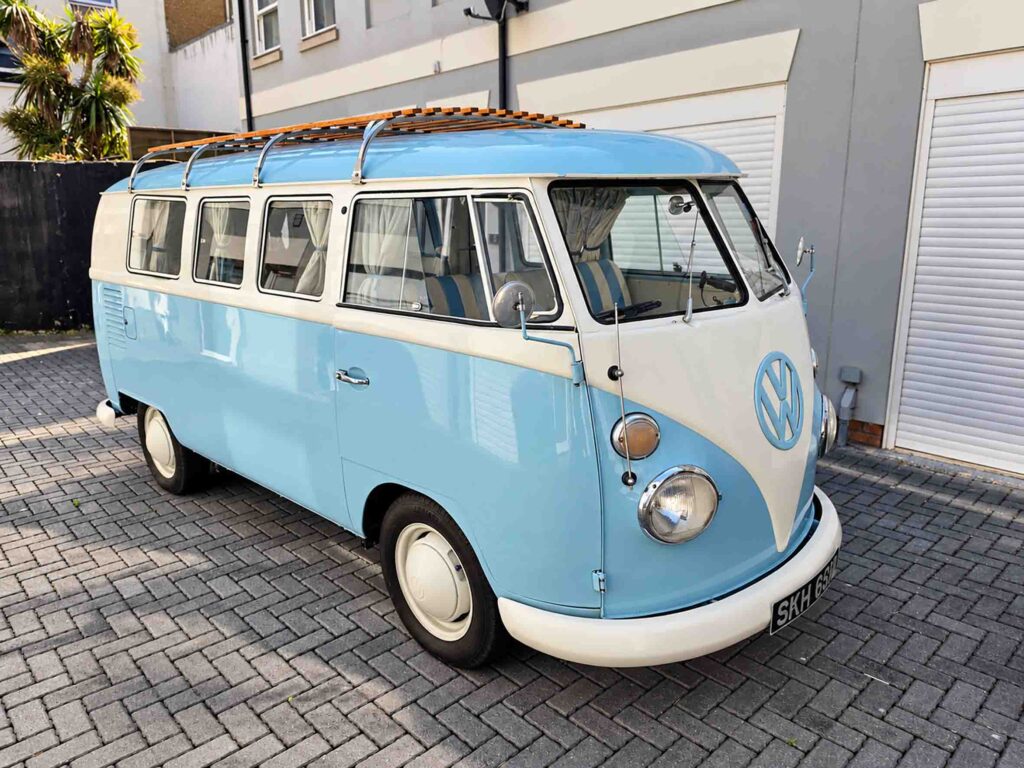
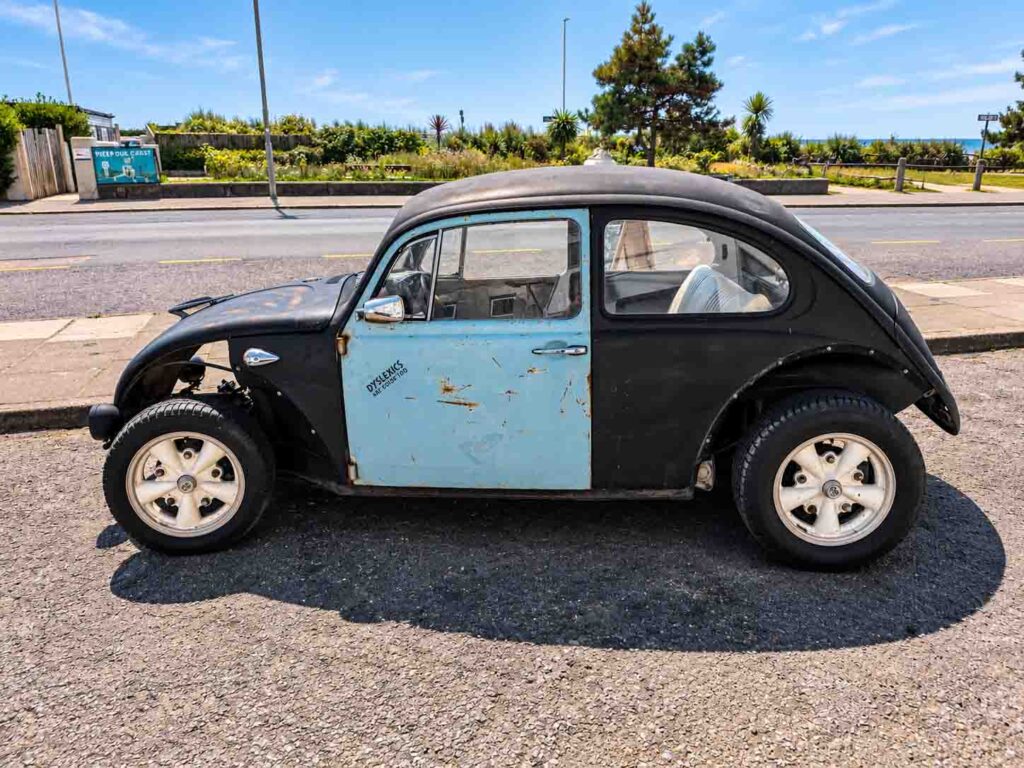
His uncle Jonathan owns a beautiful 1964 Volkswagen Type 2 Split Screen, while Richy also remembers growing up around his uncle’s Beetle — a Volkswagen Jonathan has owned since he was 16.
Long before a turbocharged Mk1 entered Richy’s life, old Volkswagens were already part of the scenery.
It’s one of the things that can be difficult to explain about Volkswagen culture from the outside.
The specifications matter. The modifications matter. The engines, wheels and stance all matter.
But they’re rarely the entire reason people remain attached to these cars.
Memories accumulate around them.
People meet because of them. Families grow up around them. One generation’s Volkswagen becomes part of the next generation’s story.
And eventually, another car gets added to the chain.
When we first arranged to photograph Richy’s Golf around Portsmouth, the obvious headline was the power.
A Mk1 Golf weighing around 950kg with an estimated 300bhp is always going to get attention.
But after spending some time with the car, that’s probably the least interesting way to describe it.
The engine conversion is impressive, certainly.
But this Golf has already had several lives.
It has competed.
It has been stripped and prepared.
It has survived long enough to become an old Volkswagen.
It has gained a considerably newer turbocharged engine.
And now it has reached Richy, who is modifying it again while trying to understand more about where it came from.
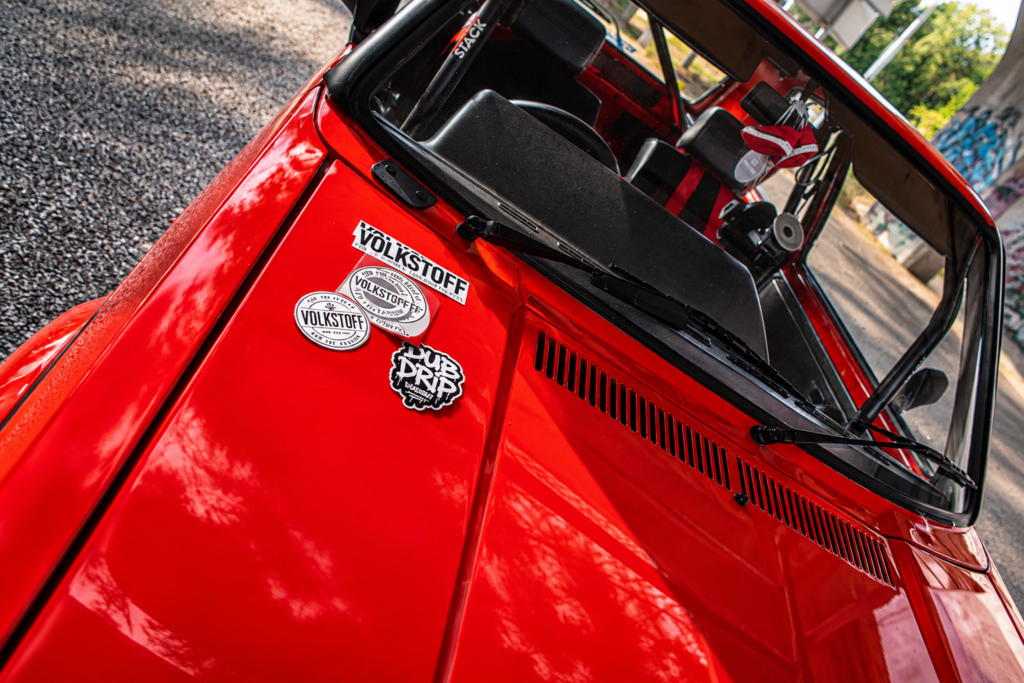
That is what makes old cars interesting.
They’re never completely ours.
We’re simply responsible for them for one part of a much longer story.
Richy isn’t attempting to freeze this Golf at a particular point in its history. He’s changing what he wants to change, preserving what matters, fixing what needs fixing and, crucially, actually driving it.
There are faster cars.
There are more original Mk1s.
There are certainly easier ways of getting 300 horsepower.
But very few modern cars can give you this combination of history, mechanical character, family connection and the feeling that you’re simply looking after the latest chapter of something that started long before you arrived.
And for Volkstoff, that’s exactly why cars like Richy’s matter.
Not simply because they’re Volkswagens.
Because of the people, history and experiences that gather around them.
For the People.
For the Passion.